
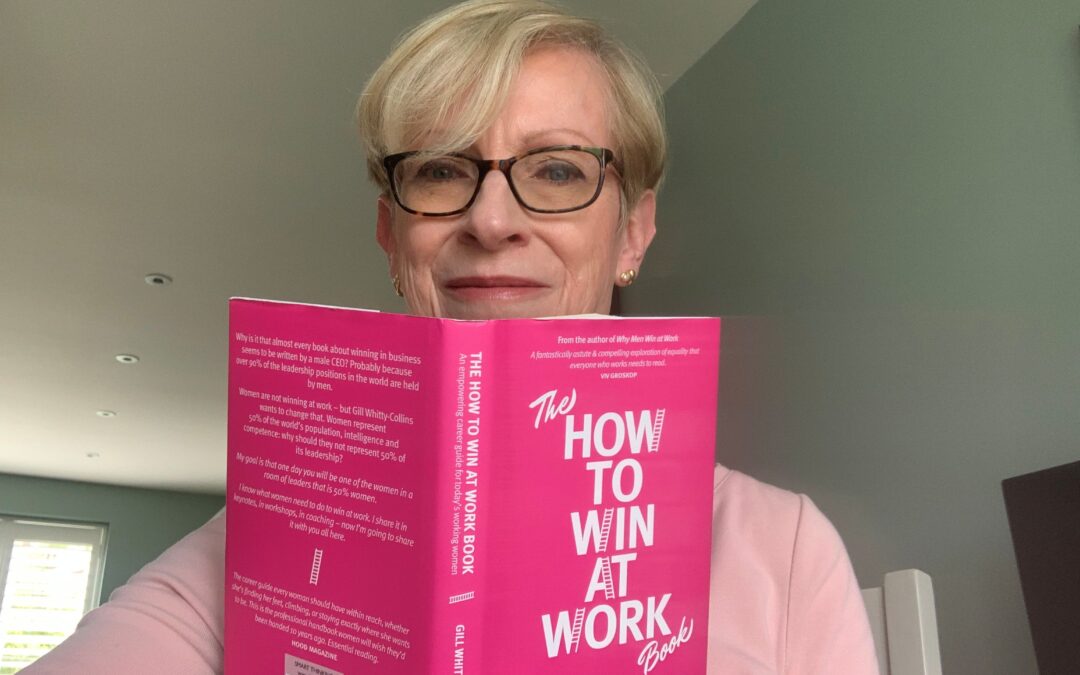
This week, I’m reviewing Gill Whitty‑Collins’ brand‑new ‘The How to Win at Work Book.’ Gill is an acclaimed feminist, keynote speaker, consultant and executive coach. Her first book, Why Men Win at Work, is one I regularly recommend, so I was eager to read her latest publication. Whether you’re a woman just starting out in your career, mid-career or a career changer, this book is for you. If you’re a man, there’s a dedicated chapter just for you at the end of the book.
The author’s background
Gill spent 26 years at P&G, rising to Senior Executive level. It was only once at the top of the organisation that she first encountered gender inequality. Since then, she has used her experience and research to explore why men continue to outperform women in the workplace — and what can be done about it.
The evidence base
Gender inequality in leadership is now worse than it was five years ago. A few striking statistics:
- FTSE 100 companies have 43% women in board roles but only 32% on executive committees.
- Just 29% of Finance Directors are women.
- A man is ten times more likely to make partner in a law firm.
- Only 2% of global venture funding goes to female‑only founded start‑ups, despite women owning 39% of privately held businesses.
The gap is real — and widening.
The rationale
Gill offers pragmatic guidance on what women can do to navigate and succeed in a system not designed for them. Crucially, she also addresses what men can do to level the playing field. Women cannot achieve equality without men’s active support. A dedicated chapter invites men to become “FeMANists” — something worth sharing with the men in your life, at home and at work.
Structure
Each chapter tackles a core theme, ending with reflective questions that help you identify what’s within your ability to control. Topics include:
- How to win in meetings
- Personal branding
- Visibility
- Networking
- Knowing your value
- Negotiating a salary increase
Practical tips feature throughout the book.
My top take‑aways
1. The invisible power of culture
Men, as the dominant group in many workplaces, especially at the top, often don’t notice the culture. They were the first to occupy this space. It’s been designed by them, it’s comfortable and they simply don’t notice it. Women, however, can feel excluded or “othered,” which can undermine confidence and performance. In order to fit in to the culture, women often mirror male behaviour, which can appear inauthentic and erode trust. Yet when women express themselves authentically, they risk being labelled “bossy” or “aggressive.” These stereotypes come from both men and women.
2. Strengths and superpowers
Ironically, the pressure to fit in stops women from using their natural strengths — the very things that build confidence and credibility. Playing to your strengths fosters authenticity, and authenticity inspires trust. Men often succeed because they feel comfortable. Comfort breeds confidence, and confidence inspires trust.
3. How fear of men holds women back
Women’s life experiences shape how they interpret male behaviour at work. Many women have experienced sexual harassment or at some point felt intimidated by a man. When a woman feels unsafe, instinctively her brain shifts into fight, flight, freeze or fawn. These are chemical responses to a perceived threat. Our brains are trying to keep us safe. Anxiety impacts on the brain’s ability to function at its best. It’s only when the environment feels safe that women are able to perform at their best.
4. Perfectionist syndrome
Fear of failure holds many women back. Women often want certainty; men are more comfortable with guessing or not knowing all the facts. Not feeling certain makes women sound tentative when they present or offer their views in meetings. In turn, this lack of confidence can lead to incorrect assumptions about a woman’s capability.
5. The importance of competitive sport
Men are more likely to see work as a game — in part, because more men have played competitive sport. Sport teaches resilience, confidence and how to lose. Gill cites compelling data: 90% of high‑level female executives played sport; among women in the C‑suite, it rises to 96%. Yet by age 15, only 15% of girls still play sport, compared with 30% of boys. We should be encouraging girls to stay in sport — it builds skills that matter.
6. The importance of relationships
Women often focus on performance while men invest in relationships. As a result, women can be less visible. Yet women are more often naturally strong relationship‑builders, with greater empathy. By reframing networking as listening and connecting — not self‑promotion — women can raise their profile and ensure they are not overlooked.
7. Tips from the 7% of top female leaders
Advice from women at the top includes:
- Don’t emulate men — lead with your strengths.
- Treat work as a game; don’t take it too seriously.
- Aim for excellence, not perfection.
- Use diplomacy, humour and emotional regulation.
- Don’t show fear — it undermines confidence in you.
- Don’t try to win at work and at home; share the emotional labour and spilt chores.
8. Advice for men
The penultimate chapter offers clear guidance for men: notice the culture, champion women, reward them fairly, and change systems that perpetuate inequality. Gender equality benefits everyone — including the business bottom line.
Read this book if:
- You’re a woman developing your career at any stage.
- You’re a man willing to actively support women at work and at home.
- You’re an employer who wants to understand how gender equality strengthens culture, performance and talent attraction and leads to organisational success.
Find out more about Gill Whitty-Collins
Buy her books
Sign up for her Rants and Reflections newsletter