
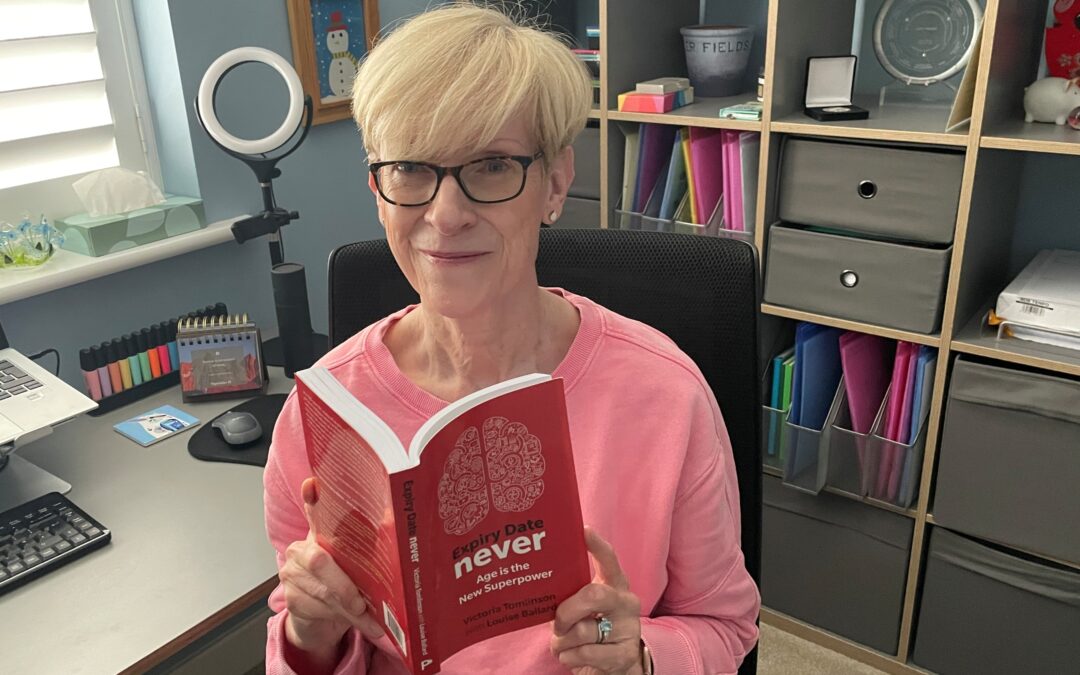
Are you currently standing at a career crossroads? I’ve just finished reading ‘Expiry Date Never: Age is the New Superpower’ by Victoria Tomlinson, with Louise Ballard.
While the book speaks directly to readers over 50, several of the author’s messages provide valuable advice to anyone contemplating a career change. Victoria’s advice: Don’t think of career change as starting again; think of it as redeploying accumulated experience into a new chapter.
Here are my top takeaways:
1. Your experience is an asset, not a liability
The book challenges the assumption that your career value declines with age. Judgement, pattern recognition, relationships, credibility and knowing “how things really work” become particularly valuable as AI handles more routine knowledge work.
2. Beware of ‘drift’
Once you’re no longer working for an organisation with a sense of purpose and direction, it’s easy to become unmoored. Make sure you take regular small steps towards what comes next. For example, there’s no need to complete a lengthy, expensive qualification. Research courses. Meet up with former colleagues and people doing things you’re curious about. It’s small actions, not rumination, that will keep you moving forward.
3. Eventbrite
You can use Eventbrite to search for events in your area. Some are free, and they cover a range of interests. You may have expertise and experience to contribute to a group that aligns with your particular interests.
4. You don’t need to follow a linear career
A career change can be a reinvention rather than a retirement plan. Both authors’ careers illustrate this: Louise started an AI business at 52, while Victoria reinvented her own working life repeatedly in her 50s and 60s.
5. Let go of the idea of a single permanent job
Interim roles and fractional work can help fill gaps in your CV.
6. Don’t discard your past—combine it with something new
Opportunities often sit at the intersection of existing expertise and a new field, technology, interest or purpose. Louise’s move into AI is a particularly clear example: decades of communications experience became relevant to helping organisations adopt new technology.
7. AI should be embraced, not feared
The authors argue that experienced people may have an advantage with AI because they can judge its output, challenge plausible-sounding nonsense and understand where human judgement matters. So, for a career changer, become AI-enabled rather than trying to compete with AI.
8. Think in terms of contribution and purpose, not just job title
A longer working life creates scope for portfolio careers, projects, consulting, entrepreneurship, fractional roles and work with social impact—not simply another conventional full-time position. The book explicitly encourages people to reshape careers on their own terms.
9. Networks and visibility matter enormously
Career change isn’t just about acquiring skills; it’s about making your experience visible to new people and sectors. The book’s practical message includes building new networks and developing digital skills.
In summary
The book’s most empowering message for anyone standing at a career crossroads is:
Don’t ask “Am I too old to change career?” Ask “Where would my accumulated experience, combined with what I can learn next, create the greatest value?”
See my other posts on the topic of Career Change here: Career Change Archives – The Career Catalyst