
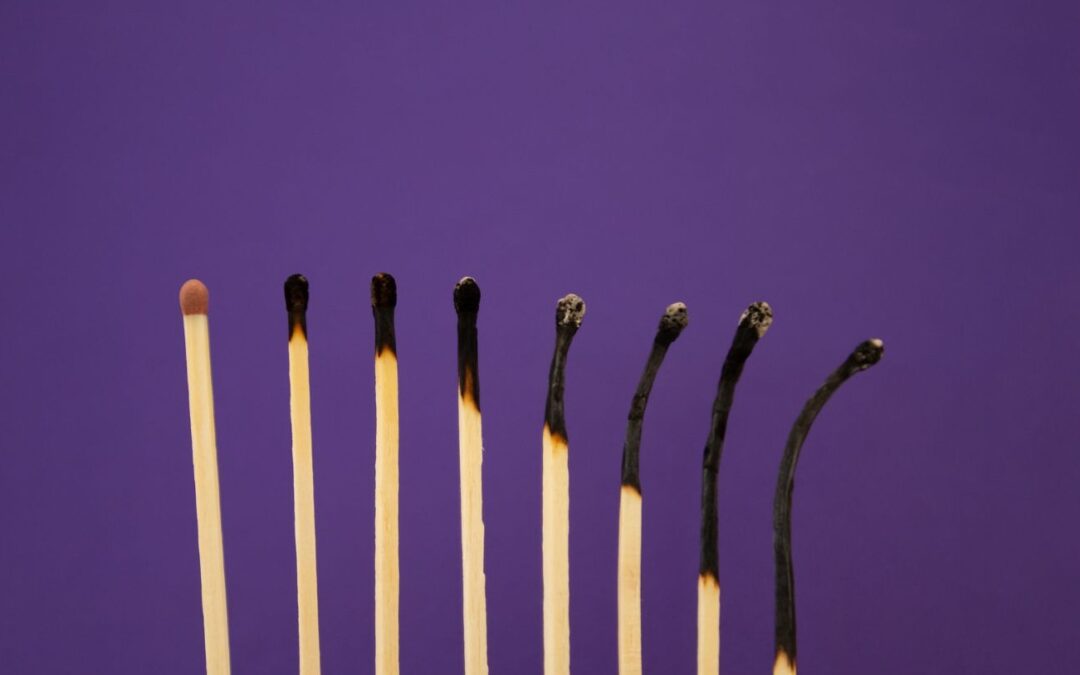
The topic of this post came from a message from one of my connections. She shared that she was so depleted of energy that she felt physically and mentally unable to perform well in job interviews. Her lack of success meant she couldn’t escape the burnout she was experiencing in her current role. As a consequence, she felt stuck and increasingly dispirited.
What is burnout?
The World Health Organisation (WHO) recognises burnout as an occupational phenomenon. While it is not a medical or mental health condition, Mental Health UK states that burnout has been classified as a syndrome, meaning a collection of symptoms or signs associated with a specific health-related cause.
Burnout is a state of physical, mental and emotional exhaustion. It can occur when you experience long-term stress and feel under constant pressure.
For those working in Higher Education in these challenging times, you may have witnessed or perhaps experienced this personally. Stress tends to be short-term and something you can usually work through. Burnout, on the other hand, can make you feel so detached and demotivated that it impacts your very ability to function. You may experience a sense of hopelessness that your situation will not change.
Here, I explore what burnout feels like, why it’s important to recognise the signs, and what can be done about it.
Symptoms of burnout
According to the University of York, there are three categories of burnout:
Physical
Physical symptoms could include: feeling tired and drained, frequent headaches or muscle pain, frequent illnesses due to a lowered immune system, and a change in appetite or sleep habits.
Emotional
Emotional symptoms could include: a sense of failure or self-doubt, loss of motivation, feeling helpless, trapped and defeated, a negative outlook, detachment, and a decreased sense of accomplishment.
Behavioural
Behavioural symptoms could include: withdrawing from responsibilities, using food/drugs/alcohol to cope, isolating yourself, taking out frustrations on others, procrastinating, and skipping work or coming in late/leaving early.
The impact
The impact of burnout can include:
- Reduced productivity
- Lack of energy
- Feeling helpless, hopeless, resentful and cynical
- Feeling as though your tank is literally empty
- An impact not only on your work but on your wider life, leaving you vulnerable to infections
It’s therefore critical to take steps to deal with burnout as a matter of urgency.
How to deal with burnout
Carrying on as you have been will not resolve burnout. The University of York suggests the three R approach:
- Recognise – watch for warning signs
- Reverse – undo the damage by seeking support and managing stress
- Resilience – build resilience by taking care of your physical and emotional health
What is causing burnout?
In a WONKHE article earlier this year, Sabrina Fitzsimons, Assistant Professor of Education at Dublin City University, wrote about this subject. She suggests the following:
Ask what in the job is driving the strain. Sabrina says: “In higher education, it’s often the cumulative effect of chronic workload…competing demands…., student support expectations, poor organisational resources, and insufficient recovery time – rather than any single pressure in isolation.” Naming these should help you identify the people and processes that need to be addressed, whether that is through your line manager, HR, Occupational Health, professional body or union.
Ideally, this should explore a workload review, possibly a clarification of your role, workplace adjustments, protected recovery time and clearer boundaries around working hours. Institutions have a duty of care to manage these issues and to support you.
There may also be internal resources available, such as wellbeing support for staff, or other staff resources provided by a third party to your university.
You may find it helpful to talk to your GP if you are struggling to sleep, finding yourself feeling anxious, or unable to stop thinking about work. A medical professional may suggest some workplace adjustments that could help, whether that is time away from work to recover or appropriate therapeutic intervention.
Most people, says Sabrina, need both workplace change and personal support.
Summary
Your employer has a duty of care to work with you to provide support and reasonable adjustments. Acknowledging that you’re experiencing burnout is an important first step. It’s also important to recognise that the solution cannot always sit with you. Understanding what’s driving the strain at work, seeking appropriate support and making changes to the working environment may all be part of the recovery process.
Burnout is what happens when you try to avoid being human for too long. Michael Gungor
Resources provided by the University of York:
- Burnout identification, prevention and treatment
- Breathing exercises for stress
- The importance of taking time to switch off
- How to spot if you are suffering from burnout
From Verywellmind: